Mainboard IPO Listing Criteria: SEBI Eligibility Requirements Explained
A walk-through of SEBI's Mainboard eligibility norms: net tangible assets, operating profit, net worth and the QIB route.
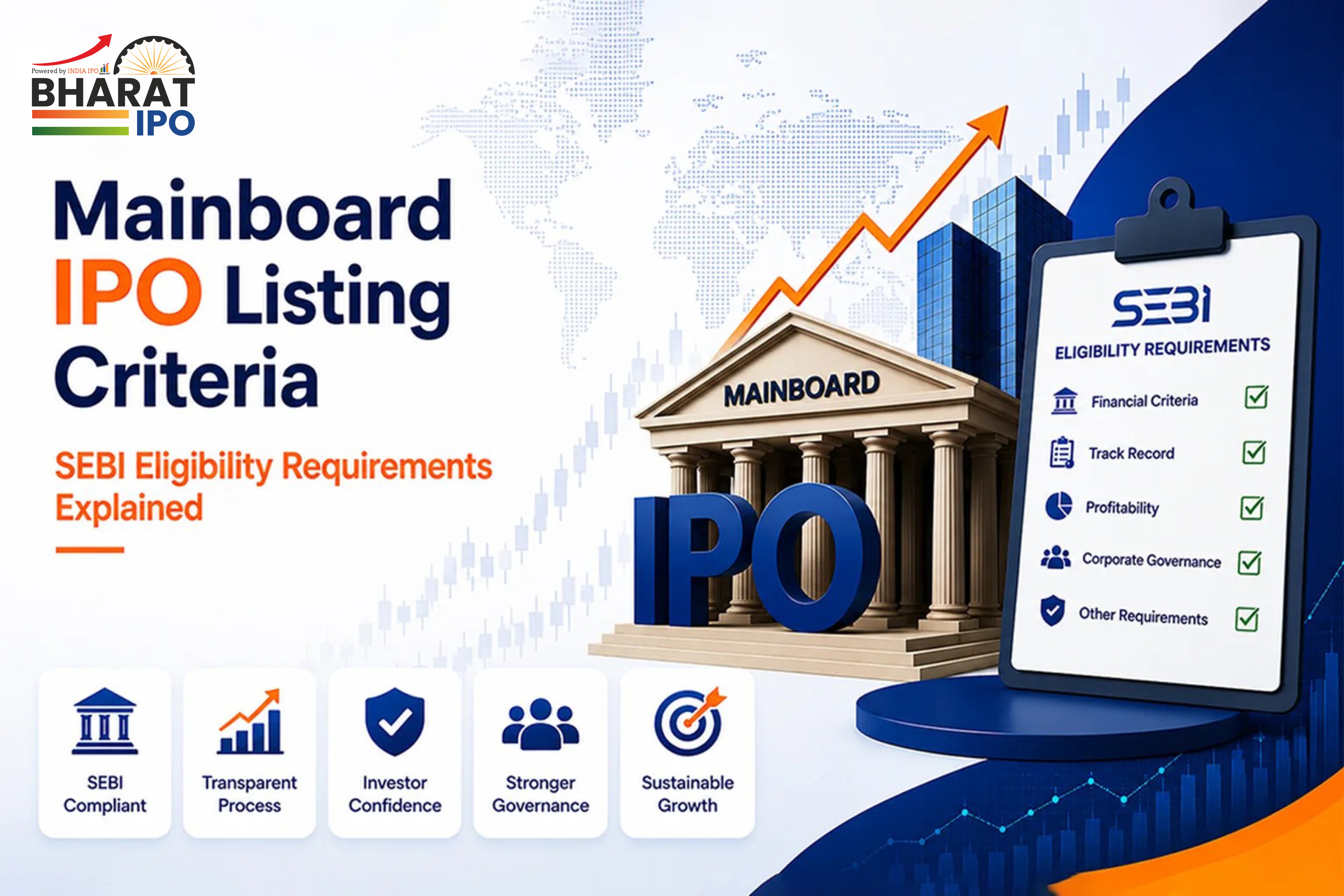
In FY 2025-26, 108 companies raised about ₹1.76 trillion through Mainboard IPOs, India's busiest year on record. Activity has slowed in 2026, and companies are looking harder at issue size, valuation and timing, which starts with knowing SEBI's eligibility rules.
Get these criteria wrong and the DRHP comes back with observations.
Eligibility vs readiness
Eligibility is a pass or fail test on net worth, net tangible assets and profit, or the alternative QIB route. Readiness asks whether your reporting, board, controls and management can cope with life as a listed company. A company can be eligible and still be years from ready.
Route I: Profitability route, Regulation 6(1)
Operating profit must be positive in each of the three qualifying years, and for a fresh issue not more than 50% of net tangible assets may be held in monetary assets unless already committed to business use. The company must be a public limited company, with a post-issue paid-up capital of at least ₹10 crore and all shares dematerialised.
Route II: QIB route, Regulation 6(2)
Companies that fail the profitability tests, often fast-growing, loss-making or capital-heavy businesses, can list through a book-built issue in which at least 75% of the net offer goes to Qualified Institutional Buyers. If that 75% isn't reached, the subscription money is refunded.
Governance and promoter requirements
- Independent directors in the proportion required for listed entities
- Audit, Nomination & Remuneration and Stakeholders' Relationship Committees
- Internal financial controls and a risk management framework suited to the business
- Minimum promoters' contribution of 20% of post-issue capital, subject to lock-in
- Disclosure of promoter litigation, regulatory history and defaults
Mainboard or SME?
More than 1,380 companies have listed on BSE SME and NSE Emerge, raising over ₹35,000 crore, and about 350 have since migrated to the Mainboard. A Mainboard IPO usually suits companies with an established revenue base, a multi-year audited track record and a fundraise large enough to justify the extra compliance; an SME IPO often fits earlier-stage companies needing smaller capital and faster execution.
Documents to prepare before filing
- Audited and restated financial statements
- Complete secretarial records and statutory filings
- Board and shareholder resolutions authorising the IPO
- Verified shareholding pattern including the promoter group
- Material agreements with customers, vendors and lenders
- Tax records and details of all legal matters
Not sure which route fits? Our free eligibility check runs your numbers against both Mainboard routes and the SME criteria.